
How a Jharkhand Village Is Adapting to a Changing Monsoon
The story of Madhaiya's fight for water, farming and climate resilience as climate change reshapes rainfall patterns in rural Jharkhand.
.webp)
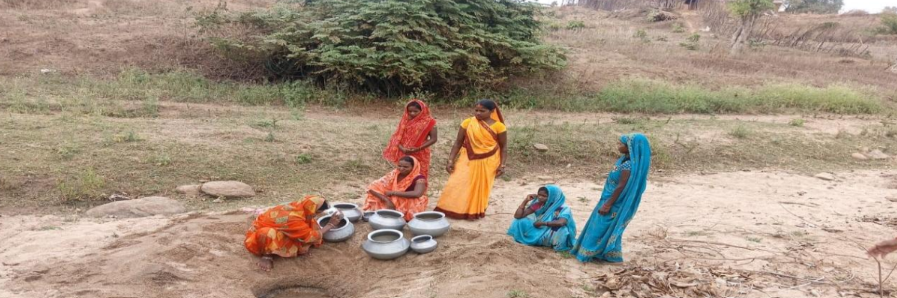
Image courtesy: MSUS
Author: Grow+ Published Date: 15 July 2026
Editor's Note
Climate change is a global challenge, but no two places experience it in the same way. Across India, communities are noticing that the rains they once relied on are changing. In some places, they arrive weeks late. In others, they fall in intense bursts or fail altogether. These shifts are quietly reshaping farming, water, food, livelihoods and everyday life. Yet these stories rarely find a place in larger conversations on climate change.
Through the GROW+ network, we are documenting these changing realities from across the country through the organisations that have worked alongside communities for years. Their observations, built over decades of trust and engagement, offer a close look at how people are experiencing a changing climate and the ways they are responding with their own knowledge, ingenuity and collective action.
This story from Mahila Samagra Utthan Samiti (MSUS) is based on its work with communities in Manatu block of Palamu district, Jharkhand. It has been translated from the original Hindi, with only light edits by the GROW+ team. You can read the original Hindi submission in the PDF below.
Translation
Madhaiya Village, Navdiha Panchayat, Manatu block, Palamu District, Jharkhand
The mornings in Madhaiya village, nestled in Navdiha Panchayat of Manatu Block in Palamu district, Jharkhand, used to begin with greenery, the sound of cattle bells, and the fragrance of fields. The lives of the 148 families living here rested on farming, forests, and animal husbandry. Generations of people from Scheduled Caste (SC), Other Backward Class (OBC), and Particularly Vulnerable Tribal Group (PVTG) communities had lived in harmony with nature.
Of the village's total 321 acres of land, approximately 175 acres were cultivable. The rest was wasteland, where a few crops were grown depending on rainfall. The Jhinoyi river, which flowed through the village, provided water throughout the year. Ponds, wells, and forests were the lifelines of the village. The forest provided wood, fodder, fruits, and income, while livestock was considered every family's greatest asset. The village elders say: "In those days, cattle were our jewellery and our ATM — whenever we were in need, they came through for us."
But slowly, everything began to change.
Forests started shrinking. Ponds and water sources began drying up. The nature of rainfall shifted. Sometimes the rains came very late; sometimes they were so sudden and heavy that fields were washed away; and sometimes there was simply not enough rain throughout the entire season.
The villagers first sensed that the weather was no longer what it used to be about 10–12 years ago. The drought of 2015 still lives in people's memories like an open wound. That year, many families did not have enough grain left even to last through the year.
Farmer Pradeep Mehta of the village says:
"When the rains came on time, rice and other crops grew well. Now the fields dry up, and even if something grows, unseasonal rain ruins it."
The impact of this shift in rainfall fell hardest on women and children. As farming weakened, the men of the village began migrating to states like Mumbai, Punjab, and Rajasthan in search of work. The women left behind shouldered alone the entire responsibility of home, fields, children, and livestock.
During the summer months, the water crisis becomes so severe that women dig into the dry riverbed sand to draw out whatever little water has collected beneath — just enough for drinking and daily household needs. This is not merely a story about fetching water; it is the most heartbreaking image of changing rainfall and the climate crisis.
Sita Devi, whose husband has gone away to work as a labourer, says:
"When the men leave, everything falls on the women — the children's education, household expenses, caring for the animals. There are times when we can't even look after our own health and food."
The impact of this crisis became clearly visible on children too. Many children dropped out of school and began helping with household and farm work. Child labour increased. Child marriages rose sharply — a violation of children's rights. As farming weakened, vegetables and grains reaching village and nearby markets declined. People's incomes fell, and the risk of malnutrition grew.
But Madhaiya village did not give up.
Working together with the Mahila Samagra Utthan Samiti, gram sabha meetings began in the village. People sat together and thought about how farming could be done with less water in a changing climate. A collective decision was made to begin community farming on a large scale, and to plant trees.
Gradually, the farmers who had migrated began returning. Pradeep Mehta, Jagatlal Turi, Sitaram Bhuiyan, Shyamlal Bhuiyan, Munarik Turi, Bengali Bhuiyan, Suresh Bhuiyan, Naresh Bharti, and other farmers together began cultivating maize on approximately 80 acres of land. Farmers began earning good returns, and people's confidence began to return.
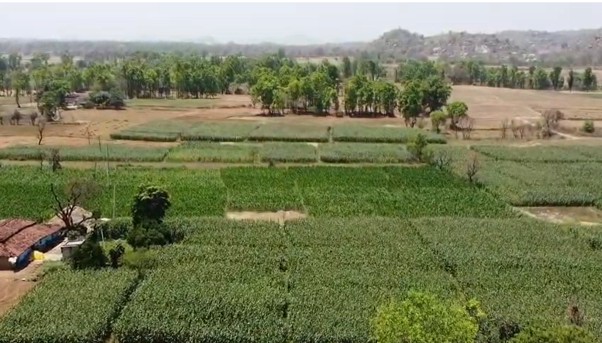
Image courtesy: MSUS
Farmer Anoop Mehta from the same village adopted drip irrigation technology and started growing strawberries. Today he is shipping strawberries from the village all the way to Kolkata and earning Rs. 5,000 to Rs. 6,000 per day. His initiative has now become an inspiration for farmers in the surrounding area.

Image courtesy: MSUS
Today, the people of Madhaiya village understand that in order to live alongside changing rainfall, transformation is necessary — in both farming and in life itself. The community now wants to move forward in the areas of water conservation structures, climate-sensitive agriculture, solar-powered lift irrigation, drip irrigation, pond revival, and forest protection.
But this is not the story of just one village.
Around 72 villages in Manatu Block are facing this same crisis today, and among them, the condition of the 17 villages in Dumri Panchayat is even more dire. Somewhere fields are drying up; somewhere women are toiling for hours for water; somewhere children are dropping out of school and doing child labour; and somewhere entire families are surviving only through migration.
And yet, hope remains in these villages — if the right support comes in time.
What Does the Community Need?
- Construction of ponds, ahars (small reservoirs), and check dams for water conservation
- Solar lift irrigation, drip irrigation, and micro-irrigation facilities
- Drought-resistant seeds and training in climate-adapted farming
- Livelihood and healthcare support for women
- Forest conservation and community forest management
- Education and nutrition support for children
- Local employment opportunities to reduce migration
The story of Madhaiya village is the voice of thousands of rural communities trying to save their lives, their farming, and their futures amid changing rainfall and climate change.
Rain is not just changing the weather — it is changing people's lives, relationships, livelihoods, and the future of generations to come.
About Mahila Samagra Utthan Samiti (MSUS)
MSUS is a grassroots organisation established in 2000 and based in Daltonganj, Jharkhand. Working across Palamu, Garhwa and Latehar districts, MSUS partners with some of the region's most marginalised communities, including Scheduled Castes (SCs), Scheduled Tribes (STs), Particularly Vulnerable Tribal Groups (PVTGs), women, smallholder farmers and rural youth.
For over two decades, the organisation has worked with communities to strengthen livelihoods, improve access to education and health, promote sustainable agriculture and natural resource management, and build resilient villages through locally led solutions. Its approach is rooted in the belief that lasting change comes when communities themselves lead the process of shaping their future.
To learn more about the organisation and its work, visit https://msus.org.in/
Related Stories
How a Jharkhand Village Is Adapting to a Changing Monsoon
The story of Madhaiya's fight for water, farming and climate resilience as climate change reshapes rainfall patterns in rural Jharkhand.
Enhancing Educational Opportunities
Find out how our impact fund enhances educational opportunities, enriching the learning experience for students.

Building Sustainable Housing
Explore how our impact fund is building sustainable housing, addressing affordability and environmental concerns.